Made in America
Flat Roofing
How a Philadelphia Rowhome Flat Roof Is Replaced: Tear-Off to White Granulated Cap
The short answer
A full rowhome flat roof replacement means tearing off to the deck, fixing rotten wood, then building up a vapor board, base sheet and torch-down modified bitumen cap, with new edges and drains. Exact systems vary by roof.
Before anything comes off: the inspection
A replacement starts with a careful look at the roof and the inside of the house. The goal is to understand why the old roof failed. Was it age? Water sitting in low spots? A failing drain box? Rot in the deck? The answers shape the job.
Every roof is different. Rowhomes in Philadelphia can have different deck framing, different numbers of old layers, and different drainage setups, even on the same block. The steps below describe the way Joe's crew does a full flat roof replacement, but the exact system on your house depends on what your roof needs.
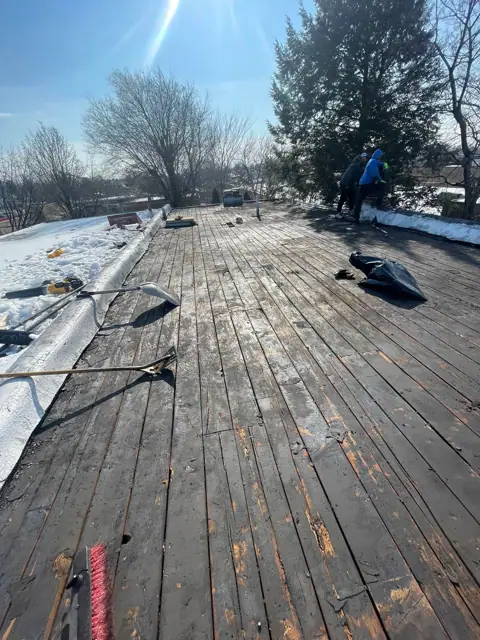
Step 1: Full tear-off, down to the deck
On a full replacement, everything comes off. The old roofing, old patches and any extra layers are removed until the crew reaches the roof deck, the wood surface the whole roof sits on.
Why go all the way down? Because you cannot judge the wood until you can see it. Putting a new roof over old layers can hide wet or rotted wood, and that hidden damage can come back to cause problems later.
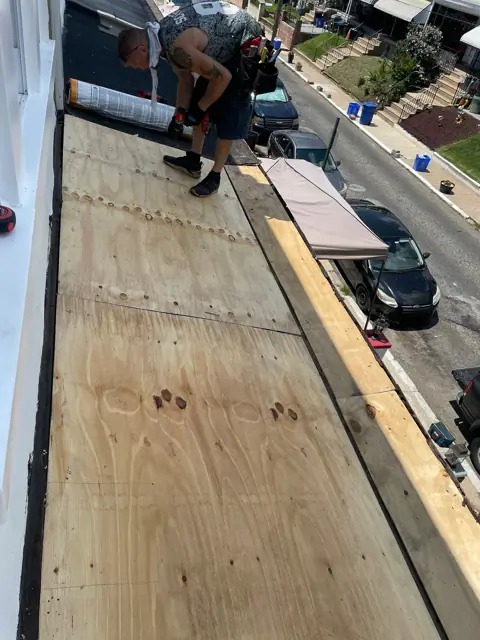
Step 2: Replace rotten joists and plywood
With the deck exposed, the crew can see and feel what is solid and what is not. Wood that has been wet for a long time can be soft, stained or crumbling. On Joe's jobs, rotten wood gets new joists and plywood.
This step matters for more than strength. A sagging or uneven deck can create low spots where water collects. Getting the deck right is part of getting the drainage right.
Step 3: Vapor board
Next comes a vapor board. In Joe's words, it blocks moisture from inside the house from getting into the roof, which is what causes blistering and early failure.
Houses produce moisture from cooking, showers and everyday living. The Asphalt Roofing Manufacturers Association explains that a vapor retarder is meant to stop water vapor from moving into a roof assembly from the interior of the building, which helps prevent condensation inside the roof system. Whether and how a vapor layer is used can depend on the building, so this is something to ask about for your specific roof.
Step 4: Base sheet
Over the vapor board goes a base sheet. It gives the roof a smooth, stable layer to bond to, and it adds an extra layer of waterproofing under the top layer. If something ever gets past the top surface, the base sheet is there underneath.
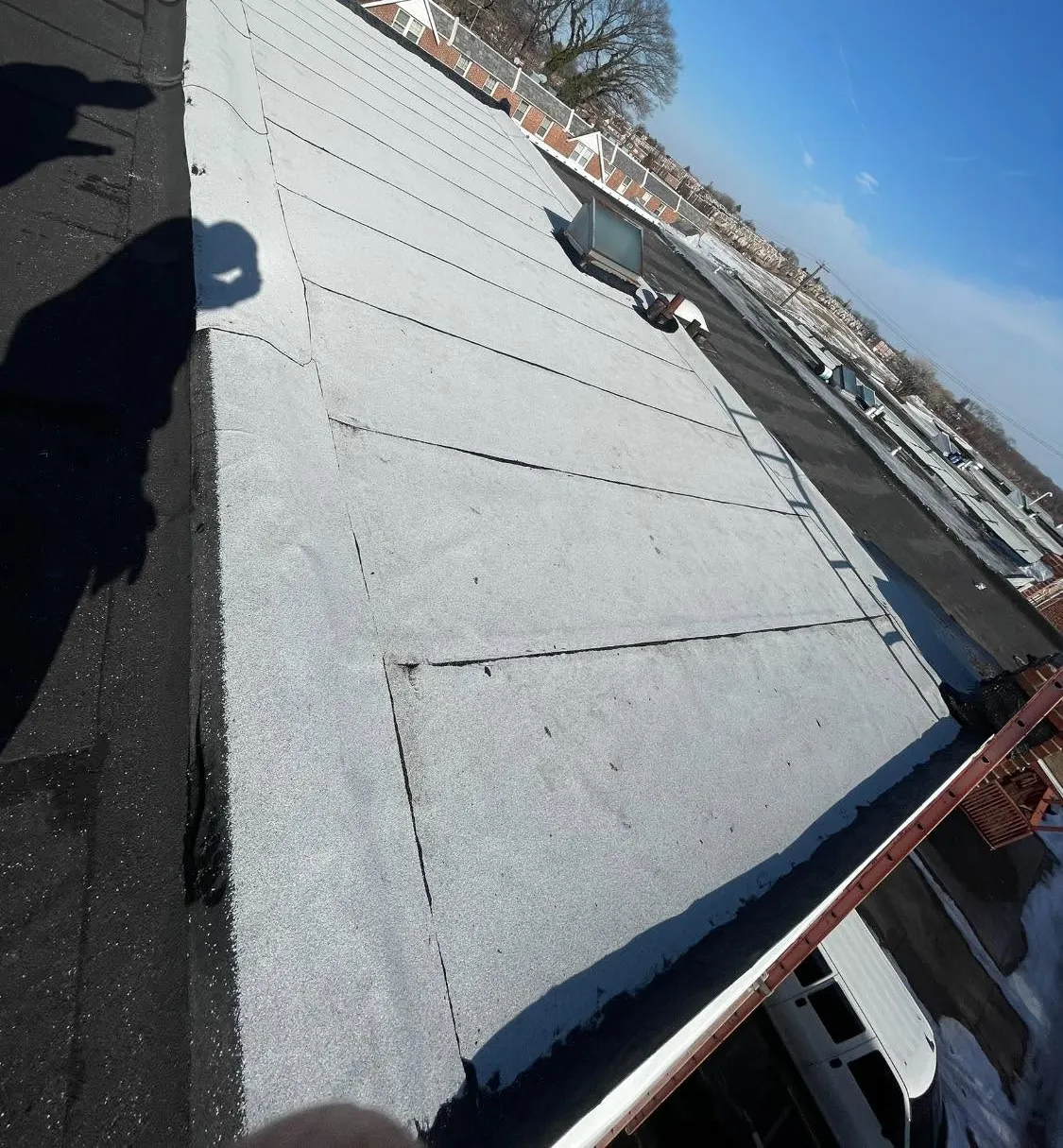
Step 5: Torch-down modified bitumen cap with white granules
The finished surface on Joe's flat roofs is a torch-down modified bitumen cap sheet. Modified bitumen is an asphalt-based roofing membrane. "Torch-down" means it is heated with a torch so it bonds in place.
The cap sheet has a white granulated surface. Manufacturers such as Sika and IKO describe the mineral granule surface on their cap sheets as protection that lets the membrane handle long-term sun and UV exposure. White, reflective granules also reflect sunlight, which manufacturers like Johns Manville say helps reduce heat gain.
New drip edge
At the roof edges, the crew installs new drip edge. Drip edge is the metal trim along the roof's edge, and replacing it means the new roof gets a fresh, clean edge instead of being tied into old, worn metal.
Copper drain boxes and drainage details
On a rowhome flat roof, water usually leaves through a drain box or scupper at the back or side and into a downspout. These are common trouble spots, especially when old drain boxes rust or come loose. Joe's crew installs new copper drain boxes as part of the job, so the place where all the water leaves the roof gets as much attention as the roof itself.
Step 6: Cleanup and photo proof
When the roof is done, cleanup should be part of the job. Old roofing, nails and scrap wood should not be left in your yard, alley or gutters.
Joe's crew also films and photographs the finished job. That gives you proof of what was installed, even though you will probably never go up on the roof yourself. You can see examples of finished roofs in the photo gallery.
Why the order matters
Each layer depends on the one under it. A great cap sheet on top of a rotted deck will not last the way it should. A new roof that still drains into a rusted drain box can still leak. A full replacement works best when every step, from the wood to the drain, is handled as one system.
That is also why a replacement is not always the right answer. If your roof does not need this much work, a good roofer should tell you so. Our guide on flat roof repair or replacement covers how to tell the difference.