Made in America
Maintenance
Why Flat Roofs Pond Water and What Drainage Has to Do With Leaks
The short answer
Flat roofs need a slight slope and clear drains. When decks sag or drains clog or sit too high, water ponds, and NRCA treats water still there 48 hours after rain as ponding.
Flat roofs are not really flat
A "flat" roof is built with a small slope so water can run toward drains, scuppers or gutters. You may not notice the slope from the street, but it is there on purpose.
For new membrane roofs, the International Building Code calls for a minimum design slope of one-quarter inch per foot, about a 2 percent slope, as cited in NRCA's Professional Roofing magazine. Older roofs and reroofing jobs do not always meet that number, and the rules for reroofing can be different. The point for homeowners is simple: when a roof loses its slope, water loses its way off the roof.
How much standing water is too much?
A little water right after rain is normal. The concern is water that stays. The National Roofing Contractors Association (NRCA) defines ponding as water that collects in low areas of a roof and remains more than 48 hours after precipitation, under conditions that favor drying. NRCA has also noted that ponding water for short periods is unavoidable, but ponding longer than 48 hours can be harmful to the roof.
A useful habit: after a rain, look at the roof from a window or ask your roofer for photos a couple of days later. If the same puddles are still there, it is worth having someone take a look.
What causes ponding
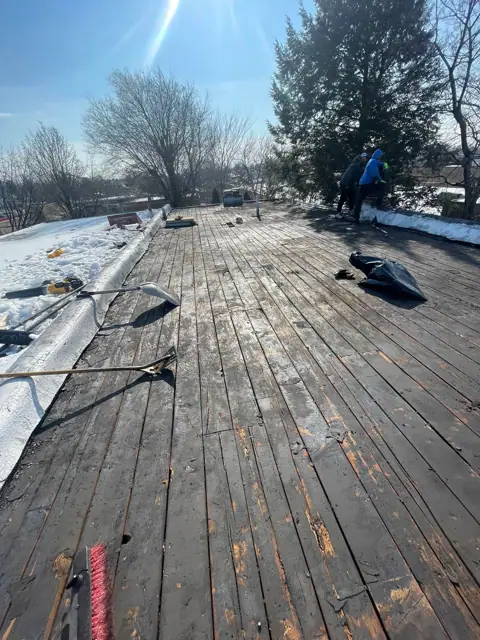
Sagging or deflected decks
The deck is the wood surface the roof sits on. Over time, framing and decking can bend or sag, especially if the wood has been wet. NRCA's Professional Roofing notes that deck deflection can create low, bowl-shaped areas in the roof surface. Once water collects in a low spot, its weight can push that spot down further, which lets even more water collect.
Clogged or slow drains
Leaves, grit and loose debris wash toward the drains. Shingle and roofing maker IKO points out that clogged or slow-moving flat roof drains can create ponding problems. A roof can have perfect slope and still pond if the exit is blocked.
Poorly set drains, scuppers and drain boxes
Drains need to sit at the low point. If a drain box or scupper is set too high, or the roof around it has been built up with patches, water has to climb to get out, and it often will not. Drain placement is one of the factors NRCA's Professional Roofing lists when talking about proper roof slope. On Philadelphia rowhomes, the drain box at the back or side of the roof is a common trouble spot.
Dips and old repairs
IKO also lists compressed insulation, low spots around skylights or vents, and building settlement as causes of dips that hold water. Layers of old patches can create ridges that act like little dams.
What ponding has to do with leaks
Standing water does not always leak right away, but it raises the odds. Here is why:
- It wears the roof. IKO notes that water can erode roofing materials and may lead to early roof failure.
- It finds the weak spots. When ponded water gets deeper than the flashing at a roof feature, it can leak in there, according to IKO.
- It adds weight. Water is heavy. IKO warns that the extra weight can damage a building's structure, and a sagging deck tends to collect more water over time.
- Freeze-thaw. In cold climates like ours, IKO says freeze-thaw cycles can wear down the mineral surface of materials like modified bitumen, shortening the roof's life.
What an inspector checks
When a roofer looks at a ponding problem, the goal is to find the cause, not just the puddle. A good inspection usually covers:
- Where water collects, how big the area is and how long it stays
- Whether drains, scuppers and drain boxes are clear, solid and set at the low points
- Whether the deck feels firm or soft in and around the low spots
- Signs of wear in ponded areas, like cracking, bare spots or algae
- Seams and flashing near the standing water
- Whether old patches or layers are blocking the water's path
Some ponding can be fixed by clearing or resetting drains. When the deck itself has sagged, the fix usually involves opening the roof, repairing the wood and rebuilding so the roof drains again. Our article on flat roof repair or replacement explains how to weigh those options.
Please leave the roof work to a pro
Do not walk on a flat roof to sweep water or clear drains yourself. Wet roofs are slippery, and a soft deck may not hold your weight. Watch from a window, take photos, and let a roofer handle anything on the roof.